











The Real Value of AI Isn’t Speed

What do you expect from artificial intelligence? Most companies give the same answer: faster processes, less repetitive work, and shorter workflows. These are tangible gains that are easy to measure. They are not bad goals.
But they postpone the real question. The promise of AI was never simply to help people work faster. It was to help them work better. And the difference between those two outcomes determines how much value a company actually creates from AI.
Ben Richards from Salesforce puts it this way: “Efficiency is a useful metric, but it does not automatically translate into real value. If I save someone fifteen minutes, what do they do with that time? The real value emerges when AI is applied to areas where it can produce tangible outcomes.”
The Advisor Arrives Prepared
RBC Wealth Management doubled its business between 2018 and 2025. Its goal is to achieve the same level of growth again, this time in half the time. But it faces a serious obstacle: the shortage of experienced financial advisors continues to grow, while demand can no longer be met through hiring alone.
Its 2,200 advisors already work with packed schedules. CRM updates, portfolio research, meeting preparation, and note-taking leave little time for meaningful client conversations or taking on new customers.
RBC addressed this challenge with Agentforce. Before every meeting, an AI agent now prepares a one-page briefing for the advisor. It includes portfolio details, upcoming tasks, the client’s favorite restaurant, or an approaching anniversary. A process that once required an hour of searching through data now takes less than a minute.
The result is clear: advisors can have deeper conversations with every client. Thirty-minute meetings are turning into hour-long discussions. And that is one of the most direct paths toward RBC’s growth target.
A Nurse’s $900,000 Recommendation
Sarah Duvall is a nurse practitioner with 25 years of experience at the University of Rochester Medicine. When she joined the surgical oncology team, one of the first major questions she faced was this: why were post-operative readmission rates so high?
She took an artificial intelligence course for healthcare professionals at Rochester’s Simon Business School and developed a tool that could analyze research and data. She wanted to explore whether a program that prepared patients for surgery through nutrition and light exercise could make a difference.
Once the calculations were complete, the picture became clear. The daily cost of readmission was $3,000. The total cost of the preparation program was $2,000 per patient. Duvall explains: “When I processed the data, I could identify relationships and bottlenecks very quickly. I did not have to search through page after page of research.”
She then used AI to help prepare the proposal she would present to senior leadership. Under normal circumstances, she would not have had the time to complete such a study. Her proposal showed that, if implemented, the program could save the organization at least $200,000 annually and $900,000 over three years. The program is scheduled to begin its pilot phase this summer.
Efficiency Can Become a Trap
A recent Harvard Business Review study shared an uncomfortable finding. AI tools did not reduce workloads. They increased them. Employees using AI worked faster, took on more tasks, and spent longer hours working. The result was cognitive fatigue, burnout, and weaker decision-making.
In other words, unless companies design their operating models intentionally, the time created by AI does not automatically turn into valuable work.
Richards connects this issue to organizational structure: “Agentic AI gives us an opportunity to rethink the organizational chart. If we are delegating low-cognitive tasks to agents, we also need to redesign the structure around that shift.”
This points to a new operating model in which managers oversee both people and AI agents, while frontline employees increasingly become coordinators of agent-driven work.
Saved Time Needs a Plan
Companies need to decide in advance how newly available time will be used. Deliberate pauses before major decisions, steps that require different perspectives, and grouping non-urgent notifications into specific time windows are not abstract ideas. They are design choices that need to be embedded directly into workflows.
But perhaps the most powerful use case is thinking together.
Nikita Skylarov, co-founder of MokuHub, wrote in a LinkedIn post: “The time created by AI did not go toward working alone. It went toward collaborating on harder problems.”
Dan Keating from Simon Business School frames the issue differently: “AI can imitate the works of Shakespeare. But it could never have written them. History’s greatest creative breakthroughs came from people. Protecting that capacity is the responsibility of companies.”
The return on AI can be measured through efficiency. But its real value accumulates somewhere else.
It appears when an advisor can spend an extra hour with a client. When a nurse has the time to analyze data and prepare a recommendation capable of saving $900,000. When an employee sits down at their desk in the morning and finds room not merely to produce, but to think.
None of these outcomes happen automatically. Companies design them.
And that design decision is what separates truly benefiting from AI from simply burning out faster.
Other Trend Reports
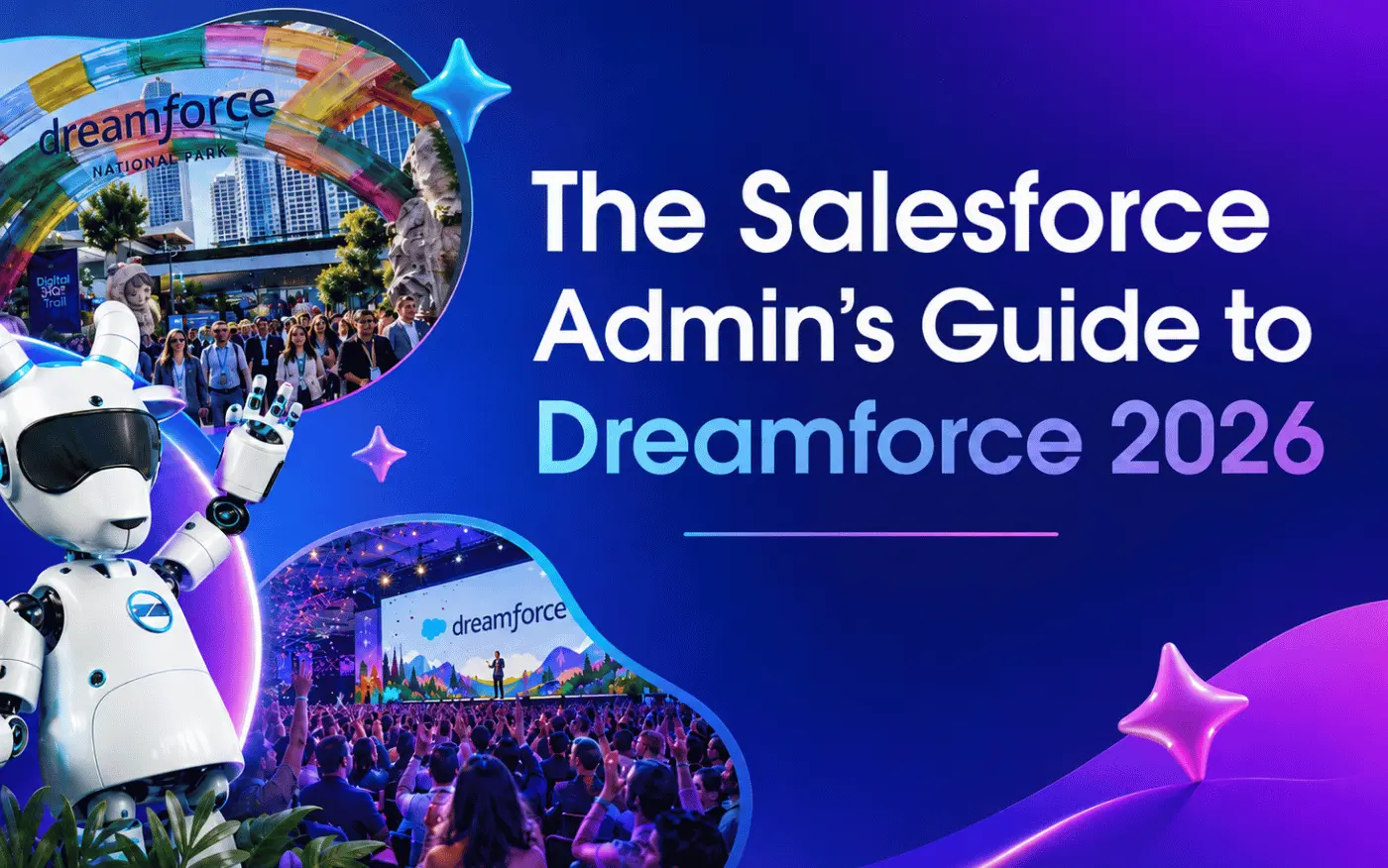
Dreamforce 2026 Preparation Guide
Everything You Need to Know Before Dreamforce 2026, taking place in San Francisco from September 15–17. Sessions, demo areas, registration details, and more.

When AI Agents Start Working Together, Who Ensures Trust?
How can companies trust AI agents that negotiate, decide, and transact? Identity, reputation, accountability, and human oversight are key.

Slackbot Takes Action Across the Salesforce Ecosystem
Salesforce’s new MCP servers bring CRM, Tableau, Data 360, and connected business applications together through Slackbot. Teams can now do more than access data—they can take action directly within Slack.